


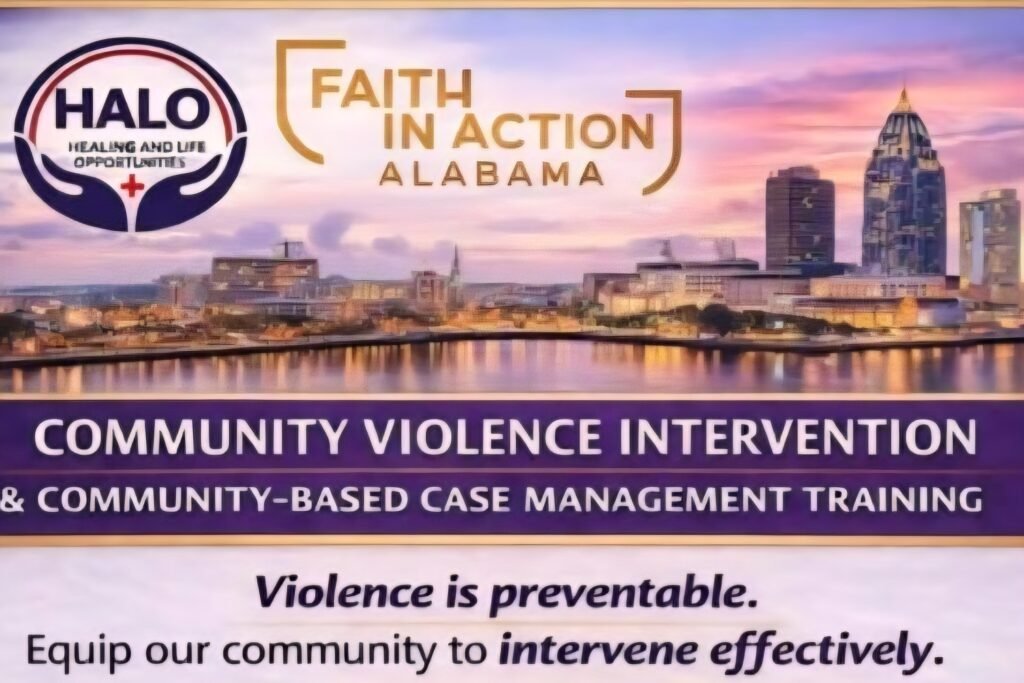
Community leaders, advocates, healthcare professionals, faith organizations, and residents gathered during National Crime Victims’ Rights Week in Mobile, Alabama for a violence intervention training focused on prevention, healing, and long-term community support.

Hosted by University of South Alabama Health’s HALO (Healing and Life Opportunities) Program in partnership with Faith in Action Alabama, the “Community Violence Intervention & Community-Based Case Management Training” equipped attendees with tools and strategies designed to help reduce violence and strengthen support systems for individuals and families impacted by trauma.
The training reflected a growing movement across Mobile centered on intervention-based approaches that treat violence as both a public safety issue and a public health concern. Participants learned about trauma-informed care, mentorship, case management, hospital-based intervention models, and methods used to support individuals considered at high risk for violence.
Faith in Action Alabama, a multi-racial and multi-faith community organizing organization established in 2016, has continued working throughout the state to develop grassroots leadership and create pathways toward systemic change. Organizers emphasized the importance of collaboration between faith communities, healthcare systems, nonprofits, educators, and local residents in addressing the root causes of violence.
The training also connected to broader violence prevention efforts taking place throughout Mobile, including the launch of the region’s hospital-based violence intervention initiatives involving USA Health and community partners. Organizers stressed that healing-centered engagement, intervention, and consistent community investment remain essential in breaking cycles of violence and trauma.
Held at The HALO House on Stanton Road, the event welcomed attendees from various backgrounds who shared a common goal of building safer and healthier communities. Conversations throughout the sessions focused not only on intervention strategies, but also on restoration, accountability, mental wellness, and the importance of creating opportunities for vulnerable individuals.
As Mobile continues expanding its violence prevention initiatives, organizers described the training as another step toward strengthening community-based solutions rooted in compassion, education, and collaboration.
For many in attendance, the message remained clear: sustainable change happens when communities work together to prevent violence before it occurs while supporting healing after trauma has taken place.