


America’s 250th Birthday stands as a definitive milestone in the history of the republic. But the annual Fourth of July narrative usually centers on a single timeline of unbroken liberty. Looking closely at the timeline stretching from 1776 to 2026 reveals a much more complicated reality. The historical record shows that the early American promise of unalienable rights did not just grow alongside chattel slavery; it was actively funded by the forced extraction of Black and Brown human capital. This foundational contradiction was visible before the republic even won its independence.

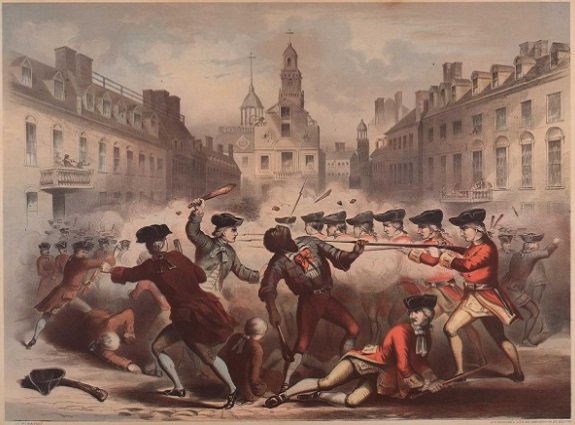
Historical records documenting the Boston Massacre highlight a turning point where British soldiers fired into a chaotic crowd. The central figure dying on the cobblestones was Crispus Attucks, an Afro-Indigenous sailor celebrated as the first casualty of the American Revolution. The deep irony is inescapable, as the very first person to bleed for the independence celebrated today was a Black and Native man whose own people were legally barred from the freedom he died to secure.

It is the same paradox famously echoed decades later in Frederick Douglass July 4th speech, “What, to the American slave, is your 4th of July?”
While this systemic friction sparked in New England, its true structural weight was anchored heavily in the Deep South. The baseline numbers from the first official 1790 U.S. Census prove this was the economic engine of the era. In plantation states like South Carolina, legally enslaved human capital made up a staggering 43.7% of the entire population, locking a rigid racial binary into the ground .This binary expanded directly into the fertile soil of Alabama’s Black Belt. There, the forced extraction of labor built the state’s early agricultural and political architecture from the ground up.
As the nation reaches America’s 250th Birthday, the demographics of the Deep South are steadily evolving. Modern data from the U.S. Census Bureau shows that Alabama’s non-Hispanic White population stands at 62.5%, shifting against a growing backdrop of a 25.9% Black population and rising multi-ethnic communities. Yet, the old structural tension has not disappeared. In the heart of the South, the modern debate simply moves from historic plantation logistics to how district lines, economic resources, and policy tools are leveraged to maintain an artificial imbalance against natural minority growth.
Two and a half centuries after Crispus Attucks fell, the story remains unfinished. The arrival of America’s 250th Birthday features a grand anniversary celebration running parallel to an ongoing struggle in the American South to make the true promise of liberty apply to everyone.