


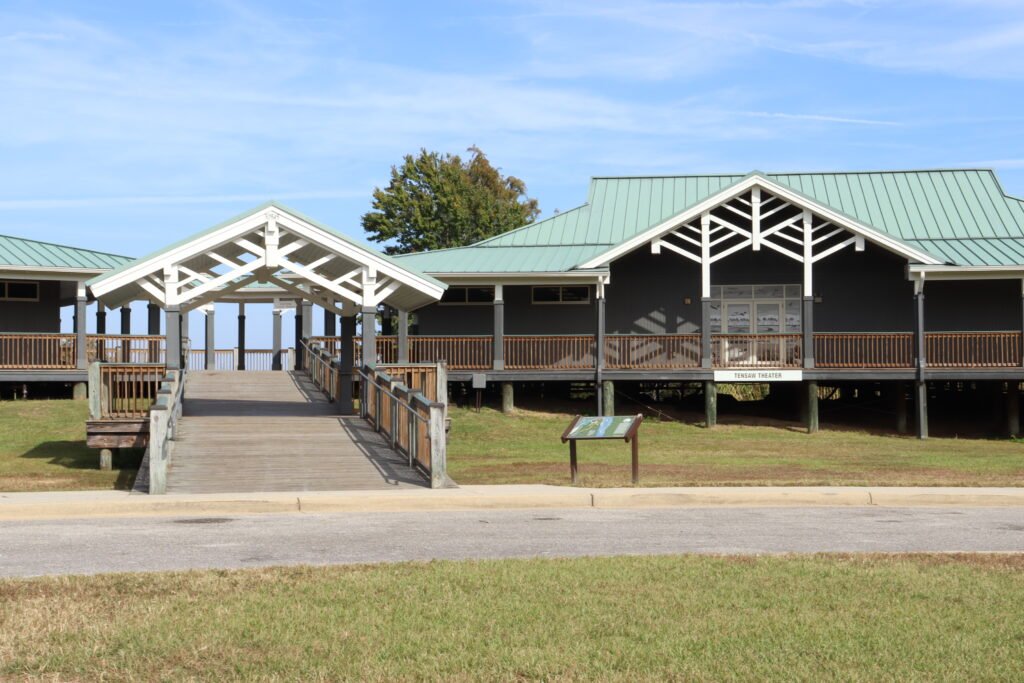
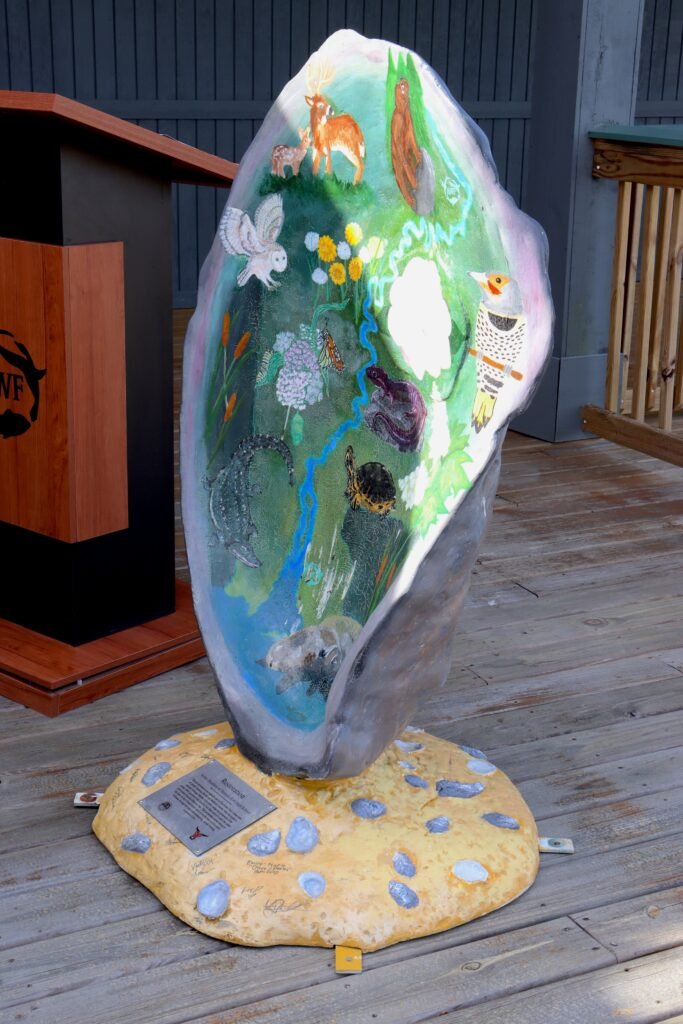
The Alabama Coastal Foundation, along with partners from the state of Alabama and local restaurants, celebrated a successful decade of the Alabama Oyster Recycling Program during a press conference on October 30th at the Alabama Wildlife Federation Delta and Bay Conservation Center. Project leaders also revealed a current effort to expand the program further into northern Alabama.

The program launched in 2016 when the Alabama Coastal Foundation received a grant from the National Fish and Wildlife Foundation, an effort spearheaded by figures like Chris Blankenship, Retired Commissioner of the Alabama Department of Conservation & Natural Resources, and Mark Berte, Executive Director of the Alabama Coastal Foundation.
According to the website, the program collects used oyster shells from local restaurants, ‘cures’ them, then places them back into Alabama waters “to help more oysters grow, provide habitat, limit erosion and improve water quality.” When the program began, Blankenship offered a ten acre area at the Marine Resources Facility for the curing of the shells.

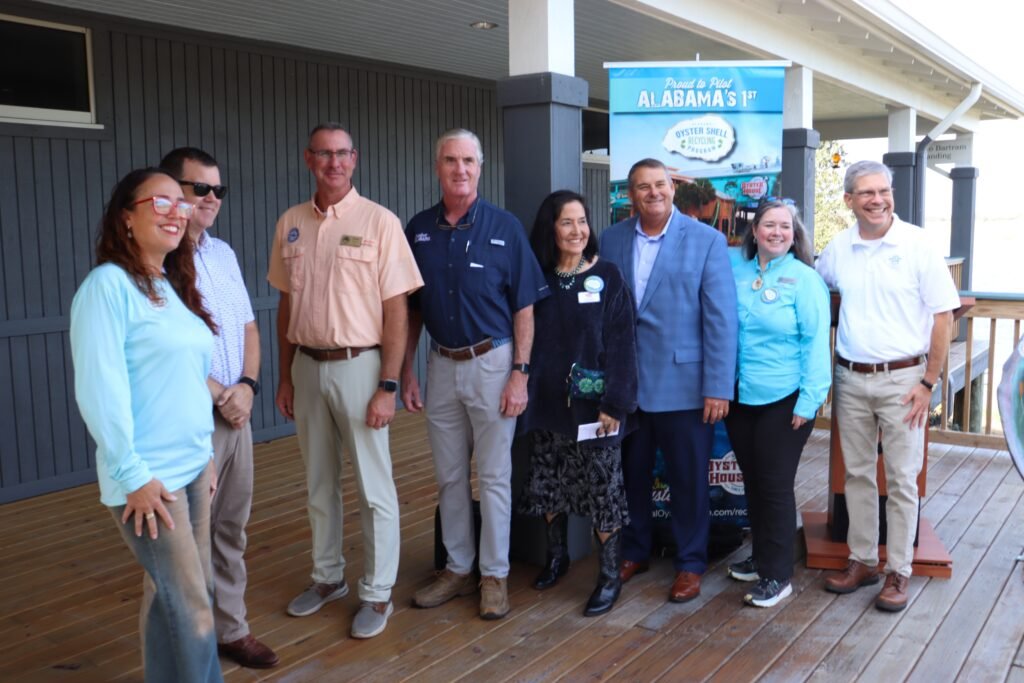
“The oysters are a huge part of not only the economy in coastal Alabama but the culture here. I mean, people love to eat oysters, oysters do great ecological services filtering the water and cleaning our bay, but they sure are tasty and good to eat and not having that resource here in the future was something that was a real possibility, and so we’ve invested a lot of money from the state and then partnering with others to try and grow that resource in the state,” said Blankenship.
Chandra Wright, Director of Environmental and Educational Outreach at The Lodge at Gulf State Park, explained that the restoration of strong oyster reefs serves a vital purpose in marine health.
According to Wright, natural oyster reefs act as a breakwater from storm surges to protect shorelines as well as providing a habitat for other marine creatures like crab, shrimp, and vulnerable juvenile fish. “Oysters can filter about 50 gallons of water per day – that’s one oyster doing that – so they’re super important for improving our water quality here in our bays and estuaries,” she said.
After ten years, the program has recycled about 36.1 million shells and restored approximately 120 acres of reef.
Local restaurant participation has played a large role in the success of the program – notably, Original Oyster House, an early participant helping pilot the program. According to Cecilia Mace, Marketing Director of the Original Oyster House Restaurant, the owners at the time were already involved in a number of sustainable practices. The restaurant even participates in oyster gardening themselves. Original Oyster House became an early successful sustainable model for the program.
According to Berte, participating restaurants typically pay about 60% of the ongoing collection costs, while the other 40% is paid through grants and other funding efforts. There are currently over thirty local restaurants that participate in the program.

Looking ahead to the future of the program, Mark Berte says they plan to expand further upstate.
“November is non-profit awareness month, so we’re using this opportunity for the 10-year anniversary to ask people to do three things. First, to support the restaurants that are participating in the oyster shell recycling program. Second, if you don’t see a restaurant participating, to invite them to do that, and that includes Birmingham, Montgomery, Auburn, Tuscaloosa – we’re trying to expand upstate. And then third to ‘Shuck a Buck’ to support the program so we can help to have another decade of good service for our coastal environment,” said Berte.
Blankenship mentioned that the program’s expansion faces a few logistical challenges, like feasible means of transportation. As Berte explained, the weight of oyster shells can make transportation over long distances more costly. Additionally, the program needs a number of restaurants upstate to agree to participate before the program can expand. Berte says they are actively working on this. With new oyster carts already in Birmingham, Berte says he is “ready to roll”.